
Menstrual cup hygiene is still a big worry for people who spend a lot of time outside the home, especially when they are on their period. Public bathrooms can be hard to use because they do not offer much privacy, have shared sinks, and do not have enough cleaning supplies. This can make it hard or uncomfortable to take care of your menstrual cup. Even with these worries, keeping public restrooms clean is both possible and important for menstrual health and general comfort.
Menstrual cup users benefit from understanding safe, discreet, and practical cleaning methods that suit different public restroom situations.
In this article, we will talk about the best ways to clean a menstrual cup in public bathrooms, what supplies to bring, how to deal with situations where there is not running water, and important hygiene tips that will help you avoid infections and feel confident using your cup anywhere.
Why Cleaning a Menstrual Cup in Public Can Feel Challenging
It can be hard to clean a menstrual cup in public because there is not much privacy and the bathrooms are shared. A lot of public bathrooms have sinks outside of the toilet stalls, which makes it hard to rinse the cup off after you take it out. The fear of being seen, judged, or misunderstood often makes things worse, especially for people who are using a menstrual cup for the first time and are still getting used to it.
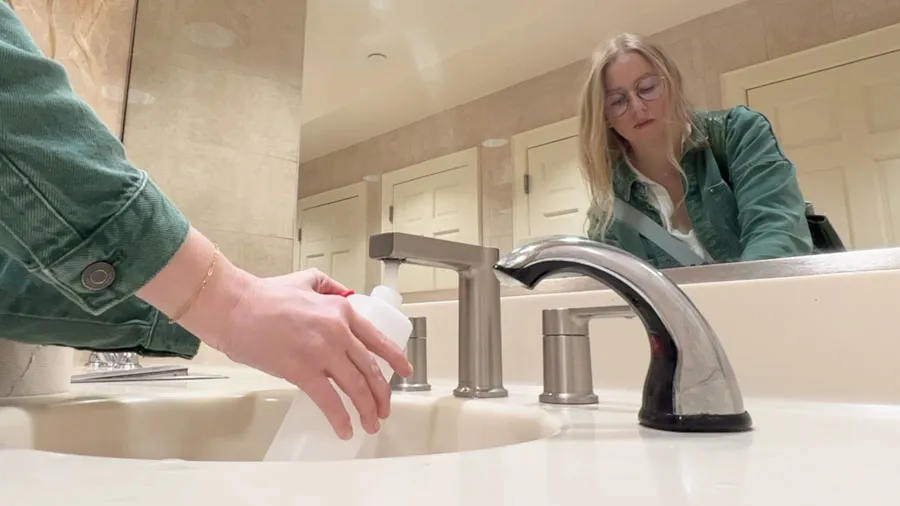
Another problem is that public restrooms do not have enough hygiene supplies. Not having clean water in the stalls, not having mild soap, and worrying about surface contamination can make people nervous about cleaning properly. Time pressure, long lines, and strange bathroom layouts add to the stress, making it seem like taking care of a menstrual cup in public places is hard, even though it is easy with the right planning.
Recommended: Can Menstrual Cups Be Safely Used with Hormone-Based IUDs vs. Copper IUDs?
How to Clean a Menstrual Cup in a Public Bathroom
Cleaning a menstrual cup in a public bathroom can feel intimidating, but following a clear process makes it safe, hygienic, and discreet. These steps explain exactly what to do and why each step matters.
1. Clean Your Hands Before Removal
Begin by washing your hands with mild soap and clean water if there is a sink available inside the stall. If a sink is not accessible, use an alcohol-based hand sanitizer or antibacterial wipes. This step is very important because bacteria and dirt on your hands can easily get on the menstrual cup and then into the vagina, where they could cause irritation or infection. Keeping your hands clean is important for good menstrual hygiene, especially in public restrooms.
2. Remove the Menstrual Cup Gently
Relax your pelvic muscles and sit or squat comfortably. Gently pinch the bottom of the cup to break the seal, then slowly pull it out while keeping it upright. Taking the cup off slowly helps keep things clean and private and stops spills. Staying calm also makes it less painful and easier to take off.
3. Empty the Cup Into the Toilet
Once the cup is removed, pour the collected menstrual fluid directly into the toilet. Do this gently rather than shaking the cup to avoid splashing. Emptying the cup immediately helps reduce odor and prepares it for proper cleaning.
4. Rinse the Cup With Water if Available
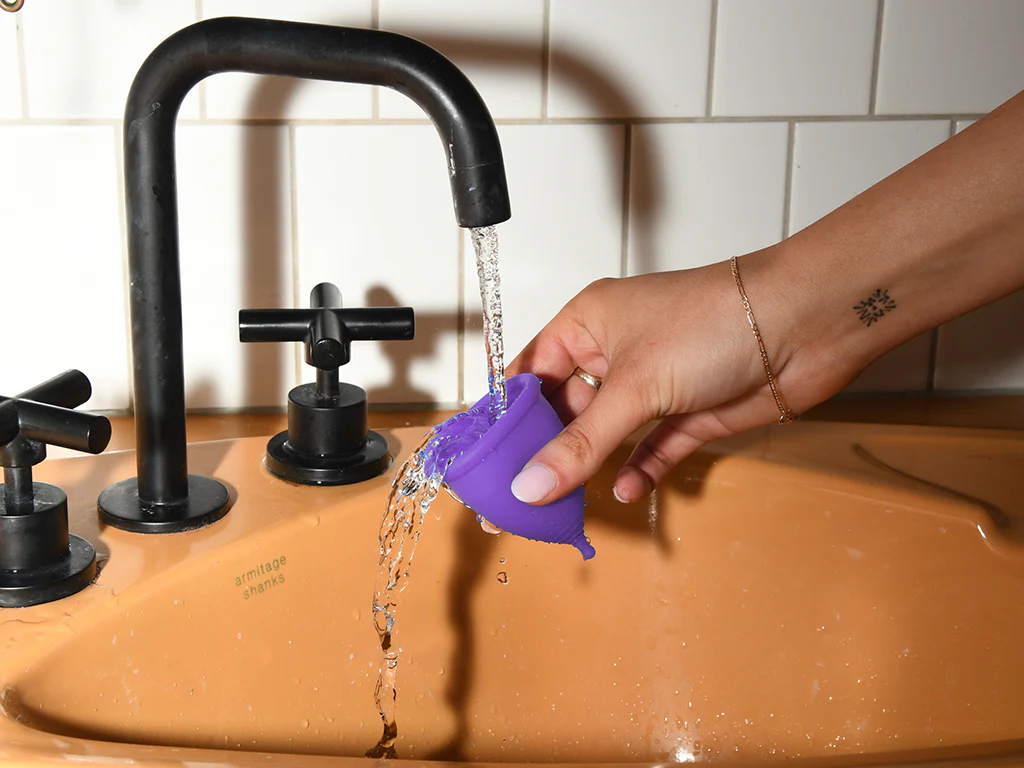
If there is a sink in the stall, rinse the cup well under running water that is clean. Rub the inside and outside surfaces with your fingers, paying special attention to the rim and the small air holes where blood can collect. If you have soap, use a mild, unscented, oil-free soap and rinse the cup well to make sure there is no soap left over, as leftover soap can irritate the vagina.
5. Clean the Cup When There Is No Sink
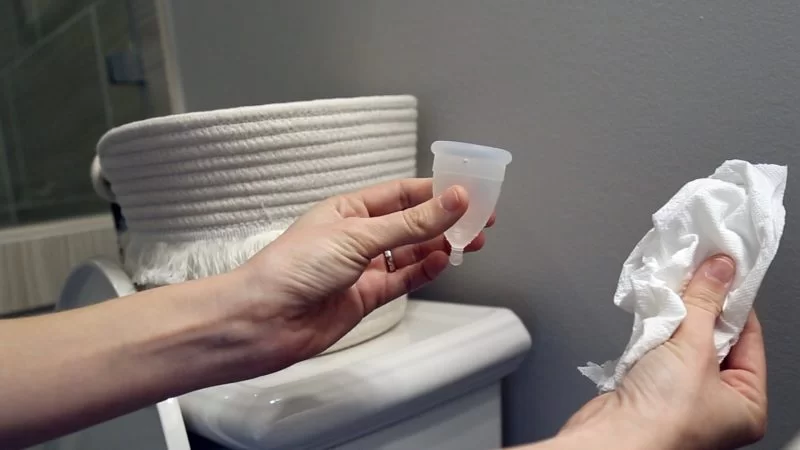
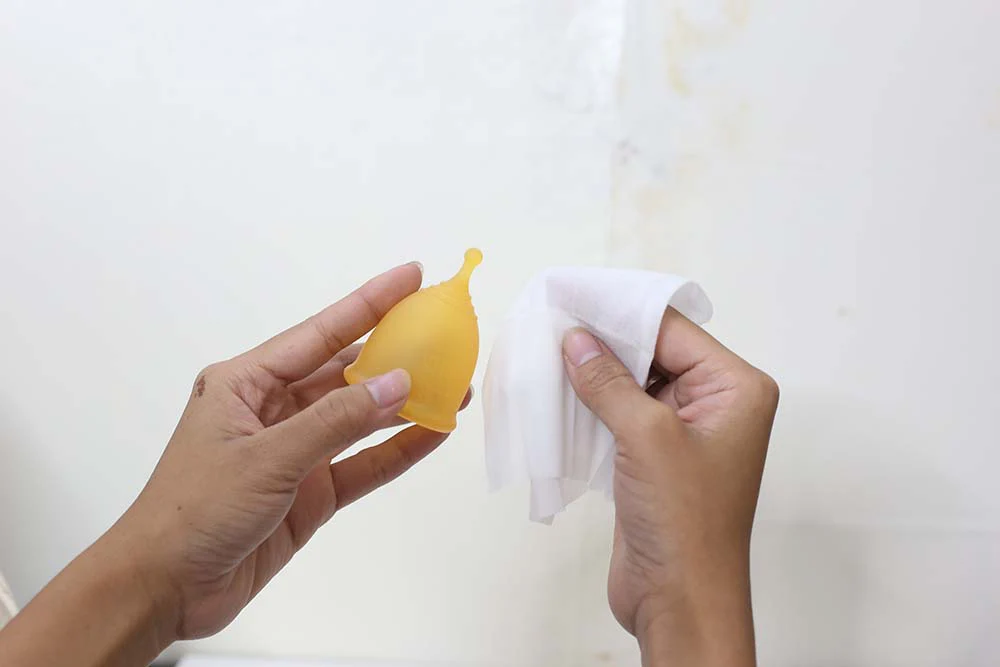
You can still clean the cup safely even if there is no sink in the stall. You can rinse the cup over the toilet with a small bottle of clean water. If you do not have water, carefully wipe the cup with clean toilet paper or menstrual cup wipes until it looks clean. This method is fine for a short time, but you should rinse the cup well with water as soon as you get home.
Recommended: Is It True You’re Not Supposed to Use Menstrual Cups with IUDs?
6. Clear the Air Holes
Check the small air holes near the rim before putting the cup back in. Use your fingers to gently rub them to get rid of any leftover stuff. If you can, fill the cup with water, cover the rim with your palm, and squeeze to push water through the holes. Keeping these holes clear makes sure that the suction works right, helps stop leaks, and cuts down on the smell.
7. Reinsert the Menstrual Cup
Fold the cup using your preferred folding method and insert it gently. Allow it to open fully inside the vagina, then rotate it slightly or tug gently at the base to ensure a secure seal. A properly inserted cup should feel comfortable and secure without causing pain or pressure.
8. Clean Your Hands After Reinsertion
After the cup is in place, wash your hands again with soap and water or use hand sanitiser if you can not get to a sink. It is just as important to wash your hands at the end as it is at the beginning. This step stops the spread of bacteria and keeps your hands clean after you handle the cup.
9. Dispose of Cleaning Materials Discreetly
Before throwing away used wipes or toilet paper, wrap them in clean tissue. Check your clothes for stains and make sure everything is where it should be. With practice, this whole thing gets quicker, easier, and less stressful.
Common Mistakes to Avoid When Cleaning Menstrual Cups in Public
Cleaning a menstrual cup in a public bathroom is safe when done correctly, but certain mistakes can compromise hygiene, comfort, or the lifespan of the cup. Being aware of these common errors helps prevent irritation, leaks, and unnecessary stress.
1. Using Scented or Harsh Soaps
Public bathroom soaps often contain fragrance or strong chemicals that can irritate the vagina and damage the cup. Plain water or a mild, unscented soap is safer.
2. Skipping Hand Hygiene
Handling the menstrual cup with unwashed hands can transfer bacteria. Hands should always be washed or sanitized before and after touching the cup.
3. Forgetting to Clean the Air Holes
The small holes near the rim help the cup seal properly. If they are not cleaned, they can cause leaks or odor.
Recommended: Spotting vs. Your Period: How to Tell the Difference
4. Reinserting a Cup That Is Not Clean
Putting the cup back in without wiping or rinsing it can lead to discomfort and smell. The cup should always be visibly clean before reinsertion.
5. Using Toilet Bowl Water to Rinse
Toilet water contains bacteria and is not safe for cleaning a menstrual cup. If clean water is unavailable, wiping the cup is a better temporary option.
6. Scrubbing Too Hard or Using Rough Tissue
Aggressive scrubbing or rough paper can damage the silicone surface of the cup. Gentle cleaning helps the cup last longer and stay hygienic.
7. Leaving Soap Residue on the Cup
Soap left on the cup can cause irritation when reinserted. Always rinse thoroughly if soap is used.
8. Trying to Sterilize the Cup in Public
Sterilizing methods like boiling should only be done at home. Public bathrooms are only suitable for quick cleaning and rinsing.
9. Rushing Because of Embarrassment
Feeling embarrassed can cause people to skip important steps. Taking a short moment to clean the cup properly is better for health and comfort.
Recommended: Why Do Tampons Leak When Not Full?
Hygiene Tips
Keeping your menstrual cup clean in public bathrooms can feel tricky, but following simple hygiene practices ensures safety, comfort, and confidence. Here are some essential tips to follow:
- Always wash or sanitize your hands before and after handling your menstrual cup.
- Rinse the cup with clean, running water whenever possible.
- Avoid using toilet bowl water or any unsafe water sources.
- Use mild, unscented, and oil-free soap if needed.
- Make sure the cup is visibly clean before reinserting.
- Wipe the cup temporarily if water is unavailable, then rinse properly later.
- Clean the small air holes near the rim to prevent residue buildup.
- Store wipes, tissues, or a small water bottle in a clean pouch to avoid contamination.
- Sterilize the cup at home regularly; public bathrooms are only for temporary cleaning.
Conclusion
Cleaning a menstrual cup in a public bathroom does not have to be stressful. With a little preparation, proper hygiene, and simple techniques, you can manage your period safely and confidently anywhere. Following these tips ensures your cup stays clean, comfortable, and ready to use while giving you the freedom to go about your day without worry.