
Menstrual cycle changes do more than determine when your period arrives; they also influence your hormones, energy levels, mood, digestion, and food cravings throughout the month. Eating the same way every day may not always be good for your health or comfort because each phase of the cycle puts different demands on the body.
This article will talk about the four stages of the menstrual cycle and the best foods to eat during each one. It will also talk about what to eat during your period to ease cramps and fatigue, which foods give you more energy and focus during the follicular phase, how to nourish your body during ovulation, and the best foods to eat to help with PMS symptoms during the luteal phase.
Understanding the Four Stages of the Menstrual Cycle
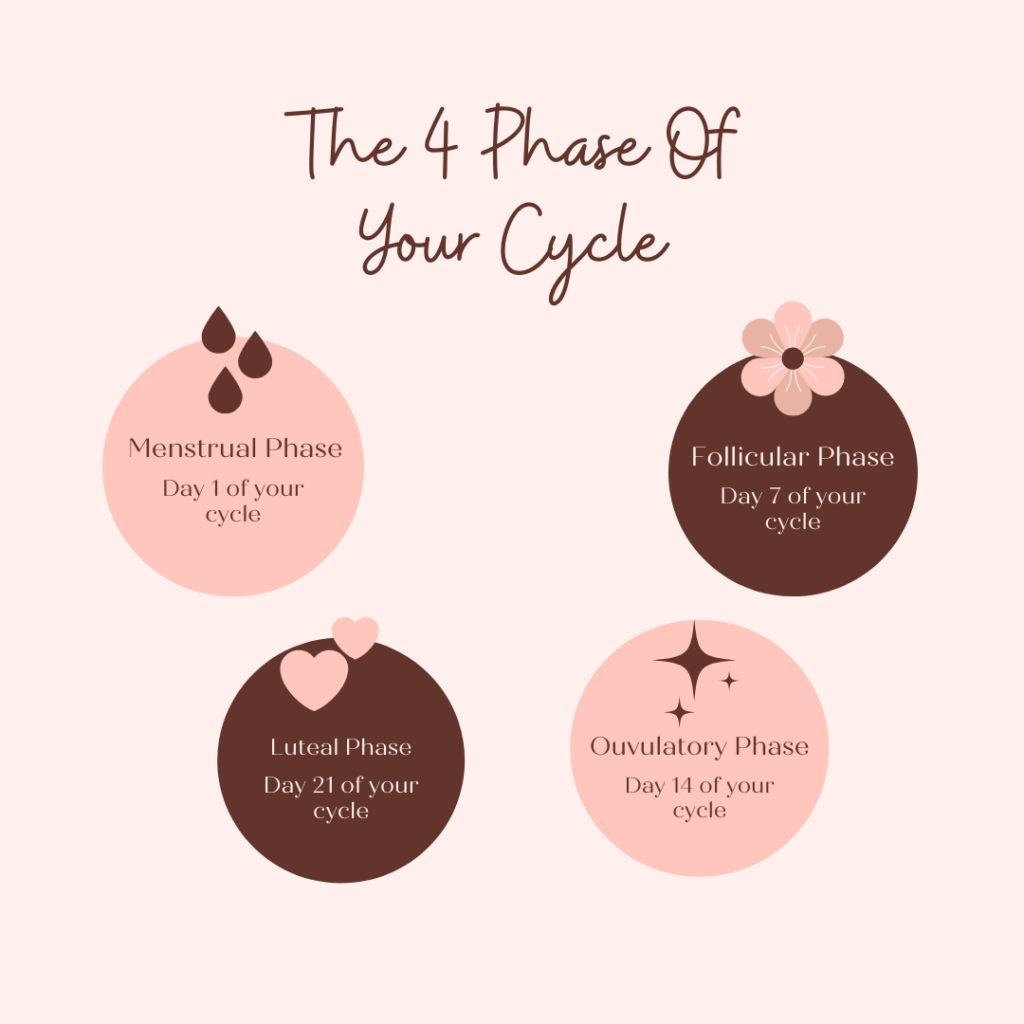
The menstrual cycle goes through a natural order, and each phase is important for reproductive and overall health. Hormones like estrogen and progesterone control these phases, which affect how the body feels and works at different times of the month.
1. Menstrual Phase
This phase starts on the first day of bleeding and usually lasts three to seven days. This is when the uterus sheds its lining from the last cycle, which causes menstruation. Your hormone levels are at their lowest, which can make you tired, give you cramps, headaches, and low energy. Rest and foods that replace lost nutrients, especially iron, are good for the body.
Recommended: Natural Ways to Balance Cortisol Levels for Better Ovulation
2. Follicular Phase
The follicular phase starts after a woman has her period and lasts until she ovulates. At this point, estrogen levels start to rise, which makes the ovaries get ready to release an egg. During this time, energy, motivation, and mental clarity often get better. Now is a good time to eat lighter meals, fresh fruits and vegetables, and foods that help with digestion and hormone balance.
3. Ovulatory Phase
Ovulation happens in the middle of the cycle when a mature egg leaves the ovary. This is when estrogen levels are at their highest, and many people feel their best, most confident, and most social. Foods high in antioxidants and fibre are good for the body because they help with hormone metabolism and overall health.
4. Luteal Phase
The luteal phase starts after ovulation and ends when the next period starts. The body gets ready for a possible pregnancy by making progesterone the main hormone. You might feel tired, and you might have symptoms like bloating, mood swings, and cravings. During this time, the body responds well to meals that are balanced, have complex carbs, and are high in magnesium. These foods can help with mood and PMS symptoms.
How Food Can Support the Menstrual Cycle
Food is very important for the menstrual cycle because it helps keep hormones in check, control symptoms, and keep energy levels steady all month long. The body reacts differently to some nutrients at different times because hormonal needs change from one phase to the next.
Eating the right foods can help with common menstrual problems like cramps, bloating, tiredness, and mood swings. Iron and other nutrients help the body during menstruation. In the later stages of the menstrual cycle, complex carbohydrates and healthy fats help keep blood sugar stable and cut down on cravings.
Food also helps the body make and balance hormones. Nutrients in whole foods, like healthy fats, proteins, vitamins, and minerals, are used to make hormones like oestrogen and progesterone. When you eat well, your body can better control these hormones and keep your menstrual cycle running smoothly.
Recommended: Foods to Eat During the Two-Week Wait for Implantation
You can give your body the nutrients it needs at the right time by eating in sync with your menstrual cycle. This can make you feel better, give you more energy, stabilise your moods, and make your menstrual cycle healthier overall.
Foods to Eat During the Menstrual Phase (Days 1-5)
The menstrual phase starts on the first day of your period, when the body gets rid of the lining of the uterus. During this time, you might feel tired, have cramps, or have headaches. Your energy levels may also drop. Eating healthy foods that are high in nutrients can help replace lost nutrients, lower inflammation, and make you more comfortable during your period.
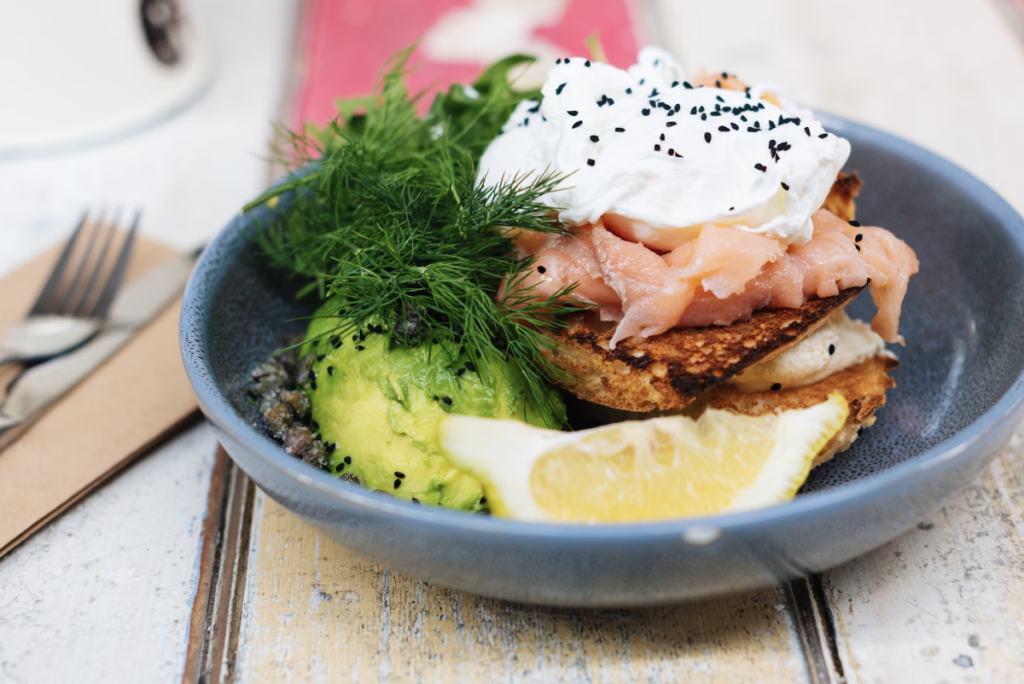
Recommended foods during the menstrual phase include:
- Leafy green vegetables such as spinach, kale, and ugwu
- Beans, lentils, and chickpeas
- Red meat and liver in moderate amounts
- Fatty fish such as salmon, sardines, and mackerel
- Eggs
- Whole grains like oats, brown rice, and whole wheat bread
- Nuts and seeds, especially pumpkin seeds and flaxseeds
- Bananas and avocados
- Dark chocolate with high cocoa content
- Warm soups, broths, and herbal teas
Eating foods high in iron, like leafy greens, beans, and red meat, can help you get back the iron you lost during your period, which can make you less tired and weak. Omega-3 fatty acids are found in fatty fish, nuts, and seeds. They can help ease cramps and pain because they are anti-inflammatory.
Eating whole grains and bananas can help keep your blood sugar levels stable, which can stop mood swings and energy crashes. Foods high in magnesium, like dark chocolate, avocados, and seeds, can help relax muscles and make you feel better. Lastly, warm soups, broths, and herbal teas can help you stay hydrated and feel better, which can help with bloating and overall health during your period.
Recommended: Does Semaglutide Affect Menstrual Health?
Foods to Eat During the Follicular Phase (Days 6-13)
The follicular phase begins after a woman’s period and ends when she ovulates. During this time, oestrogen levels go up, which helps the body heal from menstruation and get ready for ovulation. Your energy and focus tend to get better, so it’s a good time to eat foods that help balance hormones, speed up your metabolism, and help with digestion.
Recommended foods during the follicular phase include:
- Fresh fruits such as berries, oranges, and apples
- Leafy greens like spinach, lettuce, and arugula
- Lean protein sources such as chicken, turkey, and eggs
- Legumes including lentils, chickpeas, and black beans
- Whole grains like quinoa, brown rice, and oats
- Healthy fats from avocados, olive oil, and nuts
- Fermented foods like yogurt, kefir, and sauerkraut
- Green tea and herbal teas
Fresh fruits and leafy greens provide antioxidants and vitamins that support cellular repair and overall health. Lean proteins help maintain energy and muscle function while supporting hormone production. Whole grains provide complex carbohydrates that stabilize blood sugar, preventing energy crashes and food cravings.
Healthy fats from avocados, nuts, and olive oil support estrogen production, while fermented foods promote gut health, which is closely linked to hormone regulation. Green tea and herbal teas can aid digestion and boost metabolism during this phase.
Foods to Eat During the Ovulatory Phase (Days 14-16)
The ovulatory phase occurs around the middle of the cycle when a mature egg is released. Estrogen peaks, and many people feel more energetic, confident, and social. This is a good time to focus on foods that support hormone metabolism, liver health, and overall vitality.
Recommended foods during the ovulatory phase include:
- Cruciferous vegetables such as broccoli, cauliflower, and cabbage
- Colorful vegetables like bell peppers, carrots, and tomatoes
- High-antioxidant fruits such as blueberries, pomegranate, and cherries
- Lean proteins like fish, chicken, and eggs
- Seeds and nuts, especially sunflower seeds and almonds
- Whole grains including oats, barley, and brown rice
- Water-rich foods like cucumbers, watermelon, and zucchini
- Herbal teas and water for hydration
Cruciferous vegetables help the liver metabolize estrogen efficiently, supporting hormonal balance. Colorful vegetables and antioxidant-rich fruits protect cells from oxidative stress and inflammation.
Recommended: Best Vitamins to Regulate Menstrual Cycle
Lean proteins provide energy and support tissue repair, while seeds and nuts supply healthy fats needed for hormone production. Whole grains stabilize blood sugar, helping maintain energy and mood. Hydrating foods and herbal teas support fluid balance and prevent bloating during ovulation.
Foods to Eat During the Luteal Phase (Days 17-28)
The luteal phase starts after ovulation and ends when the next period starts. During this time, progesterone levels rise, getting the body ready for a possible pregnancy. A lot of people have PMS symptoms like bloating, mood swings, tiredness, and cravings. Eating foods that help with mood swings, inflammation, and cravings can make you feel better during this time.
Recommended foods during the luteal phase include:
- Complex carbohydrates like sweet potatoes, brown rice, and whole-grain pasta
- Leafy greens and vegetables like spinach, kale, and broccoli
- Lean proteins such as chicken, fish, and tofu
- Magnesium-rich foods like dark chocolate, pumpkin seeds, and almonds
- Omega-3 sources including salmon, chia seeds, and walnuts
- Fermented foods like yogurt and kimchi
- Herbal teas, especially chamomile and peppermint
- Fruits such as bananas, berries, and oranges
Complex carbohydrates help regulate blood sugar and reduce cravings for sweets. Leafy greens and vegetables provide vitamins and minerals that support hormone balance.
Magnesium-rich foods help relax muscles, ease cramps, and stabilize mood, while omega-3 fats reduce inflammation and improve overall well-being. Lean proteins support energy and satiety, and fermented foods aid digestion and gut health. Herbal teas and fruits help with hydration, bloating, and maintaining a balanced mood during PMS.
Common Mistakes Women Make When Eating for Their Cycle
Eating in sync with your menstrual cycle can make you feel better, have more energy, and be happier overall. However, many women make mistakes that lower these benefits. Knowing about these problems can help you choose better foods all month long.
1. Skipping Meals

Some women skip meals, especially during menstruation or PMS, thinking it will reduce bloating or weight gain. Skipping meals can actually cause energy crashes, worsen mood swings, and trigger unhealthy cravings.
2. Ignoring Cravings Completely
Cravings are often your body’s way of signaling nutrient needs. Ignoring them entirely can lead to binge eating or frustration. Instead, it’s better to satisfy cravings with healthier alternatives or in moderation.
3. Eating the Same Foods All Month
Many women eat the same diet every day without adjusting for their cycle. This can make it harder to meet changing nutrient needs, such as iron during menstruation or magnesium during the luteal phase.
Recommended: 8 Natural Remedies for Menstrual Cramps Relief
4. Overconsuming Processed Foods
Processed and sugary foods may provide temporary comfort but can worsen PMS symptoms, cause bloating, and destabilize blood sugar.
5. Not Hydrating Enough
Dehydration can worsen cramps, bloating, fatigue, and headaches. Many women forget to drink enough water or eat water-rich foods, especially during the menstrual and luteal phases.
By avoiding these common mistakes and listening to your body’s needs, you can better support hormonal balance, reduce discomfort, and maintain steady energy throughout your menstrual cycle.
Conclusion
Eating in sync with your menstrual cycle can have a big effect on your health, energy, and mood. Every phase of the menstrual cycle brings different hormonal changes. Choosing the right foods at the right time can help ease symptoms, keep hormones in balance, and make you feel better all month long.
You can feel more in tune with your body and better ready for the changes each cycle brings by eating foods high in nutrients during your period, supporting hormone production during the follicular and ovulatory phases, and managing cravings and PMS symptoms during the luteal phase.
You can take charge of your health and make each phase more comfortable and balanced by paying attention to your body, drinking enough water, and changing your diet based on your cycle. You can change how you feel about your period by being more aware of what you eat and making small changes to your diet.