
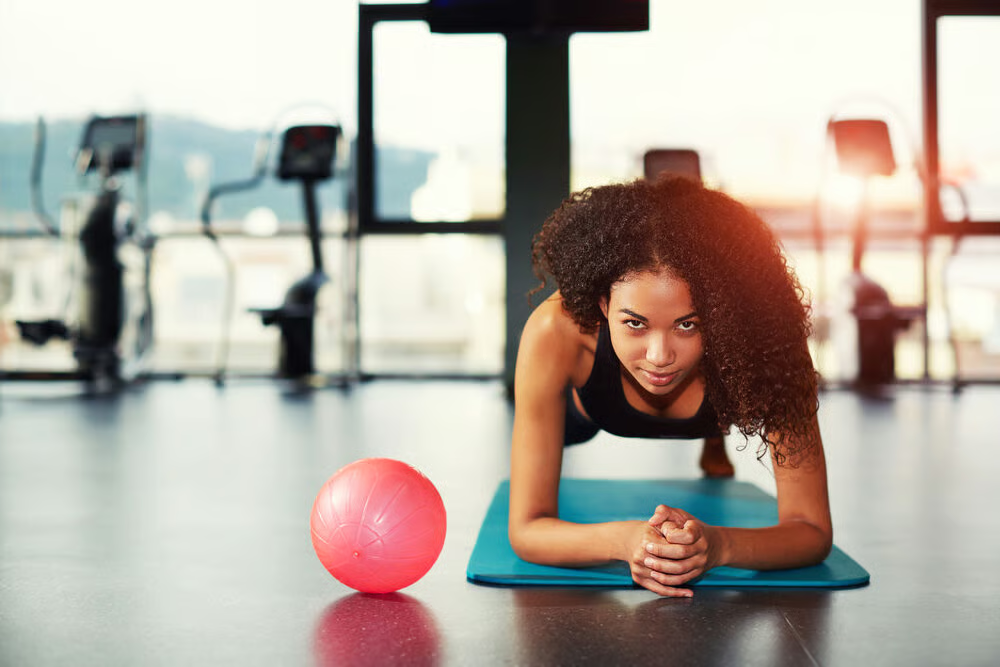
Strength training is an important part of staying fit, building muscle, and improving overall health, but it can feel different during your menstrual cycle. Many people notice changes in energy levels, strength, and motivation when they are on their period. Understanding these changes and adjusting your workouts accordingly can help you continue training effectively without overexerting yourself or feeling frustrated.
Hormonal fluctuations throughout your cycle can influence how your body responds to exercise. For example, lower energy and increased sensitivity to pain during your period may make heavy lifting or intense workouts feel more difficult. On the other hand, certain phases of your cycle may naturally boost strength and endurance. By being aware of these changes, you can plan your workouts in a way that matches your body’s needs.
In this article, we will explore how to modify your strength training based on the different phases of your menstrual cycle. You will learn which exercises to focus on, how to manage energy and fatigue, and ways to keep your motivation high.
Why Periods Affect Strength Training
Your menstrual cycle causes natural hormonal fluctuations that can influence your strength, energy, and recovery. Estrogen and progesterone levels rise and fall throughout the cycle, affecting muscle function, joint stability, and even how your body stores energy. These changes can make workouts feel easier on some days and much harder on others.

During your period, symptoms like cramps, bloating, fatigue, and mood changes are common. These can reduce your endurance, limit your range of motion, and make heavy lifting or high-intensity exercises more challenging. Even small adjustments to your routine can help you train more effectively without worsening discomfort.
Recommended: Difference Between Implantation Cramps and Period Cramps
Hormonal shifts also influence pain perception and inflammation. For example, lower estrogen levels at the start of your cycle may make joints feel stiffer, while rising estrogen later can support muscle recovery and strength. Understanding these patterns allows you to plan workouts that align with your body’s natural rhythms.
By recognizing how periods affect strength training, you can make smarter exercise choices. This helps you maintain consistency, avoid injury, and continue progressing even when your body feels different from day to day.
Understanding Your Menstrual Cycle Strength Phases
Your menstrual cycle can be divided into distinct phases that influence energy, strength, and recovery. Understanding these phases allows you to adjust your workouts so they align with your body’s natural rhythms and minimize fatigue or discomfort.
Menstrual Phase (Days 1 to 5)
During this phase, estrogen and progesterone are at their lowest, which can lead to reduced energy, cramps, bloating, and lower motivation. Strength training should focus on lighter weights, higher reps, and gentle movements. Core and lower body exercises can be adapted to avoid discomfort, and activities like yoga or bodyweight training can help maintain consistency without overexertion.
Follicular Phase (Days 6 to 14)
Estrogen begins to rise, boosting energy, mood, and strength. Muscle recovery improves, and your body is more responsive to training stimuli. This phase is ideal for progressive overload, heavier lifts, and challenging strength exercises. You may notice increased motivation and focus, making it a great time to push personal bests in compound movements like squats, deadlifts, or bench presses.
Ovulatory Phase (Around Day 14)
Strength and power often peak during ovulation due to high estrogen levels. This phase is excellent for explosive exercises, powerlifting, and high-intensity interval training. Be mindful that joint laxity may slightly increase, so maintaining proper form and warming up thoroughly is crucial. Energy levels are typically at their highest, making it a prime time for performance-driven sessions.
Luteal Phase (Days 15 to 28)
Progesterone rises and may cause fatigue, bloating, mood swings, or water retention. These factors can reduce exercise intensity and endurance. Training should focus on moderate weights, steady-paced strength work, and recovery-oriented exercises. Light cardio, stretching, or mobility sessions can complement your strength routine while supporting overall energy balance and preventing burnout.
Recommended: Irregular Periods Treatment for Unmarried
How to Adjust Strength Training During Your Period
Training during your period does not mean you have to skip workouts. The key is adjusting intensity, volume, and exercise choice to match your body’s energy levels and symptoms. Listening to your body is the most important factor for maintaining consistency and avoiding strain.
Lower Intensity and Volume
On days with cramps, fatigue, or heavy flow, reduce the weight you lift and the number of sets or reps. Focus on lighter resistance, higher repetitions, or bodyweight exercises. Shorter sessions of 20 to 30 minutes are better than skipping workouts entirely.
Exercise Selection

Avoid movements that worsen discomfort, especially heavy core exercises or high-impact lifts if you are experiencing cramps. Opt for compound exercises that are gentle on the joints, like squats with moderate weight, lunges, or resistance band work. Incorporating stretching, mobility, or yoga can also relieve tension and improve circulation.
Listen to Energy Levels
Some days you may feel strong enough for a regular workout, while other days call for a gentler approach. Track your energy and performance, and don’t push through severe pain. Fatigue is a sign your body needs rest or a lighter session.
Recovery Focus
Prioritize recovery during your period. Hydration, proper nutrition, and quality sleep can help reduce symptoms and maintain strength. Gentle stretching or low-intensity cardio can support blood flow and reduce bloating.
Recommended: Does Sex Affect Periods?
Adjusting your strength training this way allows you to stay consistent while respecting your body’s natural cycle. Over time, you will notice you can train smarter, maintain progress, and feel stronger even during your period.
Strength Training Exercise Selection for Each Phase
Your body does not perform the same way every week of your cycle. Hormonal changes influence energy levels, coordination, recovery speed, and even how heavy a weight feels. Instead of forcing the same routine all month, adjusting your exercise selection helps you work with your body rather than against it.
The goal is not to reduce progress but to train strategically. Some phases support heavier lifting and explosive power, while others are better suited for controlled strength work and recovery focused sessions. Below is a breakdown of each phase and the exercises that typically work best.
1. Menstrual Phase
During this phase, energy may be lower and cramps or discomfort can be present. Prioritize movements that feel supportive and avoid excessive strain on the core if you are experiencing pain.
Exercises to do in this phase:
- Bodyweight squats
- Glute bridges
- Light dumbbell chest press
- Resistance band rows
- Seated shoulder press with light weights
- Cat cow stretch
- Child’s pose
- Light walking or cycling
2. Follicular Phase
Energy, focus, and strength begin to rise as estrogen increases. This is a good time to challenge yourself and gradually increase weight or training volume.
Exercises to do in this phase:
- Barbell squats
- Deadlifts
- Bench press
- Bent over rows
- Walking lunges
- Lat pulldowns
- Dumbbell shoulder press
- Plank variations
3. Ovulatory Phase
Strength and power often peak around ovulation. Your body may respond well to heavier loads and explosive training. Be sure to warm up properly and maintain good form.
Exercises to do in this phase:
- Heavy squats
- Romanian deadlifts
- Hip thrusts
- Jump squats
- Kettlebell swings
- Box jumps
- Sprint intervals
- Push press
Recommended: Spotting vs. Your Period: How to Tell the Difference
4. Luteal Phase
You may experience fatigue, bloating, or reduced endurance. Focus on controlled movements, moderate weights, and steady pacing to maintain consistency without overexertion.
Exercises to do in this phase:
- Leg press
- Goblet squats
- Seated cable rows
- Step ups
- Dumbbell chest press
- Side lying leg raises
- Slow tempo lunges
- Pilates based core exercises
Tracking Your Cycle for Better Strength Training
Tracking your menstrual cycle can significantly improve how you plan and adjust your strength training routine. When you understand how your body responds at different times of the month, you can anticipate changes in energy, strength, endurance, and recovery instead of being caught off guard.
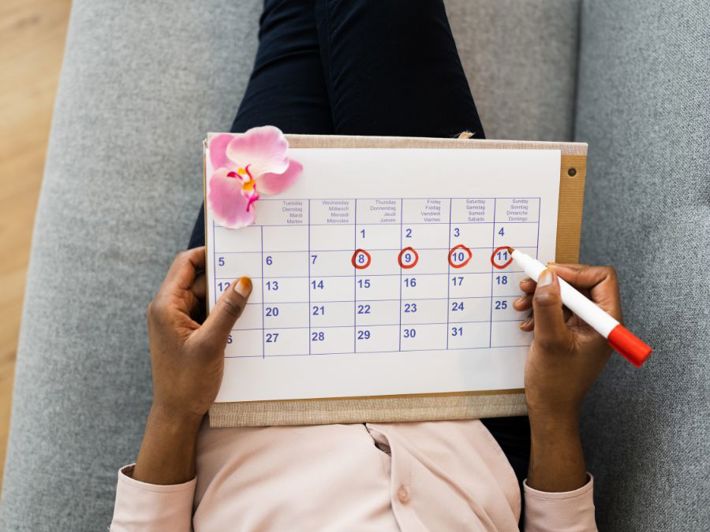
Cycle tracking helps you notice patterns. For example, you may realize that you lift heavier during ovulation, feel slower in the late luteal phase, or need extra recovery during your period. Identifying these trends allows you to schedule intense workouts during high energy phases and lighter sessions when your body needs more support.
Recommended: Can You Do Kegels On Your Period?
You can track your cycle using a journal, calendar, or a menstrual tracking app. Record details such as workout performance, weight lifted, energy levels, mood, sleep quality, and any physical symptoms like cramps or bloating. Over time, this data becomes a personalized guide for planning your training more effectively.
By consistently tracking your cycle, you train smarter rather than harder. It helps you maintain steady progress, reduce frustration on low energy days, and build a routine that works in harmony with your body’s natural rhythm.
Safety Tips to Consider
When adjusting your strength training during your period, safety should always come first. Hormonal fluctuations can affect coordination, joint stability, energy levels, and pain tolerance. Paying attention to how your body feels helps you avoid injury and unnecessary strain.
- Listen to Pain Signals: Mild discomfort or fatigue can be managed with lighter workouts, but sharp pain, dizziness, nausea, or severe cramps are signs to stop exercising. Do not push through intense pain, especially during heavy lifts.
- Warm Up Properly: Hormonal changes may slightly affect joint stability, particularly around ovulation. Spend extra time warming up with dynamic stretches, light cardio, and activation exercises to prepare your muscles and joints for strength training.
- Adjust Weights When Needed: If a weight feels unusually heavy, reduce the load. There is no loss in progress when you scale back temporarily. Proper form should always be prioritized over lifting heavier weights.
- Stay Hydrated and Fueled: Dehydration and low iron levels can worsen fatigue during your period. Drink enough water and eat balanced meals that support energy and muscle recovery.
- Know When to Rest: If your body feels completely drained, it is okay to take a rest day. Recovery is part of strength building, and skipping one session will not undo your progress.
Conclusion
Adjusting your strength training during your period is not about doing less, but about training smarter. Your body naturally goes through hormonal changes that influence energy, strength, and recovery. Understanding these shifts allows you to make intentional adjustments instead of feeling discouraged by temporary dips in performance.
By aligning your workouts with each phase of your menstrual cycle, you can maintain consistency, reduce discomfort, and continue building strength throughout the month. Some weeks may support heavier lifts and high intensity sessions, while others may call for lighter weights and recovery focused training. Both approaches contribute to long term progress.
Tracking your cycle, choosing suitable exercises, and prioritizing safety help you stay in tune with your body. Over time, this awareness builds confidence and makes your training routine more sustainable.
Strength training during your period is entirely possible with the right adjustments. When you listen to your body and respond accordingly, you create a balanced routine that supports both performance and overall well being.