

Perimenopause is a transitional phase that marks the start of hormonal changes in a woman’s life leading up to menopause. During this time, many women begin to notice shifts in their body temperature, sleep patterns, and moods. These changes can feel more intense during the summer months when the heat can trigger hot flashes, night sweats, and general discomfort. Understanding how to care for your body during this period is essential for maintaining comfort and well-being.
Summer brings unique challenges for women in perimenopause and menopause. High temperatures, sun exposure, and increased outdoor activity can make common symptoms more noticeable. Hydration, skin care, and choosing the right clothing are all crucial strategies to stay cool and healthy. Beyond physical comfort, managing emotional well-being and energy levels during this season is equally important to enjoy your summer fully.
Recommended: How to Manage Menopause Symptoms While Traveling on Planes
In this article, we will explore practical self-care hacks specifically for perimenopause and menopause during the summer. We will cover ways to manage hot flashes and night sweats, tips for hydration and nutrition, strategies for healthy sleep, and guidance for exercise and outdoor activities.
How Summer Affects Perimenopause and Menopause
Summer can make the symptoms of perimenopause and menopause feel more intense. Hot flashes, one of the most common symptoms, are often triggered by high temperatures. Many women notice sudden waves of heat, sweating, or flushing that are more frequent during the warmer months. Night sweats can also disrupt sleep, making it harder to feel rested and energized.
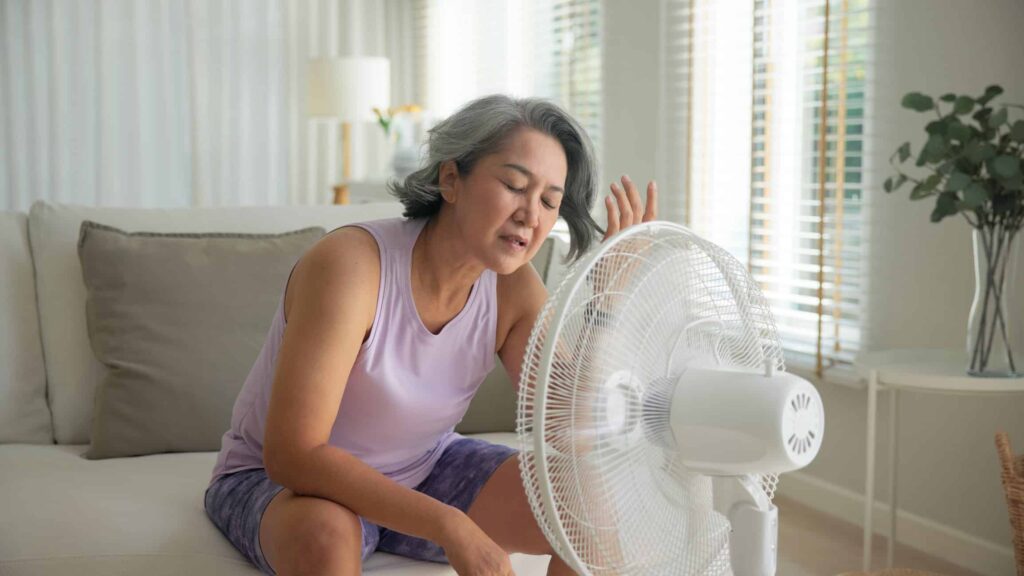
Another problem in the summer is dehydration. Changes in hormones can change the balance of fluids in the body, and the heat makes it more likely that you will become dehydrated. Even mild dehydration can make you more tired, give you headaches, and make you irritable, which can make it harder to do everyday things. To stay comfortable, you need to drink enough water and eat foods that make you feel better.
Recommended: 10-Minute Daily Menopause Morning Routine
The heat of summer can also hurt your skin and hair. Hormone levels can change, which can make dryness, sensitivity to the sun, or acne flare-ups more noticeable. Using sunscreen, moisturisers, and light clothing can help keep your skin safe and make it feel better.
Finally, summer can impact energy and mood. High temperatures can make exercise and outdoor activities more exhausting, and some women may feel more irritable or low in mood when the body is stressed by heat. Planning self-care routines that address cooling, hydration, and gentle activity can help women enjoy the season while managing perimenopause and menopause symptoms.
Summer Self-Care Hacks for Perimenopause and Menopause
1. Stay Cool to Manage Hot Flashes and Night Sweats
During the summer, hot flashes and night sweats can happen more often and be worse. Wearing clothes that are loose and made of cotton, linen, or moisture-wicking fabrics can help your body stay cool. You can take off clothes as needed if you layer them lightly. To deal with sudden waves of heat, keep a small fan, cooling spray, or towel that has been chilled nearby. Putting a cool compress on pulse points like the neck, wrists, or behind the knees can help lower your body temperature quickly. If you sweat at night, buy pyjamas that wick away moisture and bedding that is light and breathable. You could also use a cooling mattress pad.
2. Hydrate Consistently
Dehydration can make fatigue, irritability, and headaches worse, which are all things that happen a lot during perimenopause and menopause. Instead of drinking a lot of water all at once, drink it throughout the day. Eat foods that will keep you hydrated, like watermelon, cucumber, oranges, strawberries, and celery. Drinks that are high in electrolytes can help if you are sweating a lot, but stay away from drinks that are high in sugar or caffeine, which can make dehydration or hot flashes worse. Herbal teas like chamomile and peppermint can help you relax and stay hydrated.
3. Protect and Nourish Your Skin
Hormonal changes can make your skin drier, more sensitive, or more likely to break out in the summer. Use a broad-spectrum sunscreen with at least SPF 30 every day, even when it’s cloudy. After swimming or sweating, put it on again. To keep your skin from getting dry without clogging your pores, use a light, non-comedogenic moisturiser. Aloe vera gel or cooling face mists can help skin that is sensitive to heat. Wearing clothes that protect against UV rays and hats with wide brims also cuts down on sun exposure and keeps skin from getting irritated by heat.
Recommended: 5 Cooling Yoga Poses for Menopausal Symptoms Instant Relief
4. Optimize Sleep During Hot Nights
Night sweats and hot weather can make it hard to sleep, which can make you tired and cranky. If you can, sleep in a cool room with good air flow and a fan or air conditioning. Pick sheets and pillowcases that let air flow through them, like cotton or bamboo. You might also want to think about getting a cooling mattress topper. Taking a cool shower before bed can help lower your body temperature, and staying away from caffeine, alcohol, and heavy meals late in the day can help you sleep better. Meditation, deep breathing, or writing in a journal before bed can help you relax and get a better night’s sleep.
5. Exercise Smartly
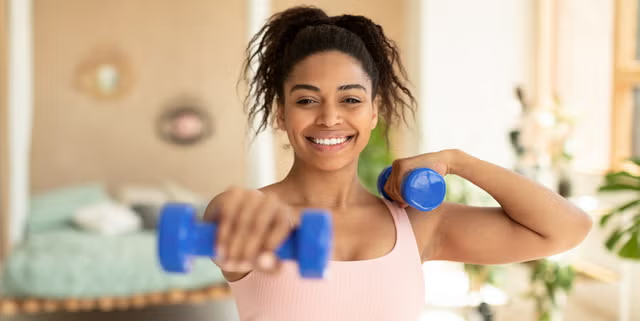
Physical activity is essential for hormonal balance, bone health, and mood regulation, but summer heat can make exercising uncomfortable. Opt for low-impact workouts such as swimming, water aerobics, walking, yoga, or cycling during cooler hours like early morning or evening. To keep from getting too hot, wear activewear that is lightweight and wicks away moisture. Drink water before, during, and after working out, and think about using cooling gear like a neck scarf or headband.
6. Support Emotional Wellness
Hormonal fluctuations in perimenopause and menopause can affect mood, anxiety levels, and emotional resilience. Summer stressors such as heat, travel, or social obligations can intensify these feelings. Practice mindfulness, meditation, or breathing exercises daily to maintain emotional balance. Journaling your thoughts or expressing gratitude can boost mental wellness. Socializing in shaded or air-conditioned areas and engaging in calming hobbies like reading, crafting, or gentle yoga can also help reduce stress and maintain a sense of balance.
7. Plan Outdoor Activities Wisely
Summer is perfect for outdoor fun, but heat can trigger symptoms if precautions are not taken. Schedule outdoor activities in the early morning or late evening when temperatures are cooler. Bring water, a hat, sunglasses, and cooling accessories such as portable fans or spray bottles. Wear light-colored, breathable clothing to reflect sunlight and avoid overheating. Include short rest breaks in shaded or air-conditioned areas, and avoid prolonged exposure to peak sun hours between 10 am and 4 pm.
8. Summer-Friendly Nutrition for Hormonal Support
Some foods can help with symptoms and give you more energy in the summer. Eat a lot of fruits, vegetables, whole grains, and lean proteins to help keep your hormones in balance. Fish, chia seeds, or flaxseeds are all good sources of omega-3 fatty acids, which can help with inflammation and mood swings. Spicy foods, caffeine, and alcohol can all cause hot flashes, so try to avoid them. Eating smaller, more frequent meals can help you stay energised and avoid bloating in hot weather.
Recommended: Easy Meal Prep for Menopause
Natural Remedies for Summer Symptom Relief
Summer can amplify menopause symptoms like hot flashes, night sweats, dryness, and irritability. Using natural remedies can provide relief without relying solely on medications.
1. Cooling Herbs & Teas
- Peppermint: Peppermint tea or inhaling peppermint aroma can create a cooling sensation and reduce hot flashes.
- Chamomile: Helps with relaxation and improves sleep quality, which is often disrupted by night sweats.
- Sage: Known for its potential to reduce excessive sweating in menopause—try sage tea or topical sage products.
2. Aloe Vera for Skin Relief
Aloe vera gel is a natural way to cool and moisturise skin that is irritated or has been in the sun. Aloe vera not only soothes burning or irritation, but it also helps keep skin hydrated during the summer months because menopausal skin tends to get drier in the heat.
3. Cold Compresses and Ice Packs
Using a cold compress or ice pack is a quick way to manage sudden hot flashes. Applying an ice pack to areas like the back of the neck, wrists, or forehead helps lower your body temperature and provides almost immediate relief from the intense heat sensations that accompany menopause.
4. Hydrating Foods and Fruits

Eating water-rich fruits and vegetables is crucial during hot weather. Foods such as watermelon, cucumber, berries, and citrus fruits help replenish lost fluids, reduce dehydration, and maintain energy levels. These foods also provide antioxidants that support overall skin and cellular health.
5. Essential Oils for Cooling and Relaxation
Lavender, peppermint, and eucalyptus are some essential oils that can help you cool off and relax. Lavender oil helps you relax and lowers your stress levels. Peppermint and eucalyptus oils, on the other hand, make you feel cooler when you breathe them in or spray them lightly. Always mix essential oils with water or a carrier oil before putting them on your skin to be safe.
Recommended: 9 Best Supplements For Perimenopause Weight Gain
6. Loose and Breathable Clothing
Wearing loose-fitting clothes made from natural fabrics such as cotton, linen, or bamboo allows the skin to breathe and reduces overheating. Breathable clothing helps minimize sweat irritation and keeps the body comfortable during hot summer days.
7. Gentle Cooling Showers
Taking lukewarm or slightly cool showers can help regulate body temperature without shocking the system. Showering before bedtime is particularly helpful in reducing night sweats, making it easier to sleep comfortably in hot weather.
8. Mind-Body Techniques
Practices such as deep breathing, mindfulness exercises, or progressive muscle relaxation can calm the nervous system, which may reduce stress-induced hot flashes. These practices not only help you deal with changes in temperature, but they also make you feel better overall during the summer.
Conclusion
Summer can present unique challenges for women in perimenopause and menopause, from hot flashes and night sweats to dehydration and skin sensitivity. However, with simple, natural remedies and mindful self-care strategies, it is possible to stay comfortable, energized, and confident even in the heat.
By prioritizing hydration, using cooling techniques, embracing breathable clothing, and incorporating herbs, gentle routines, and relaxation practices, women can navigate the season with ease.