

Pregnancy test results are often considered one of the fastest ways to confirm pregnancy at home, but many people still get confused about how accurate they really are and what can affect them. One of the most common questions is whether too much urine on a pregnancy test can cause a negative result or affect the reading in any way. These tests detect a hormone called hCG in urine, and the application of the sample can sometimes lead to uncertainty or mistakes.
Pregnancy tests are designed to react to a certain level of hCG in urine, and usually come with instructions telling you how much urine you need, either by dipping the strip or by putting drops in a test well. If the test is over-saturated or not used correctly, it may not always give a reliable result. But most of the time the issues are timing, urine concentration, or testing too early rather than just using “too much” urine.
In this article we will discuss how pregnancy tests work, whether excess urine can affect the result, the most common reasons for false negatives, and how to correctly use a pregnancy test to ensure accurate results.
How Does Pregnancy Tests Work?
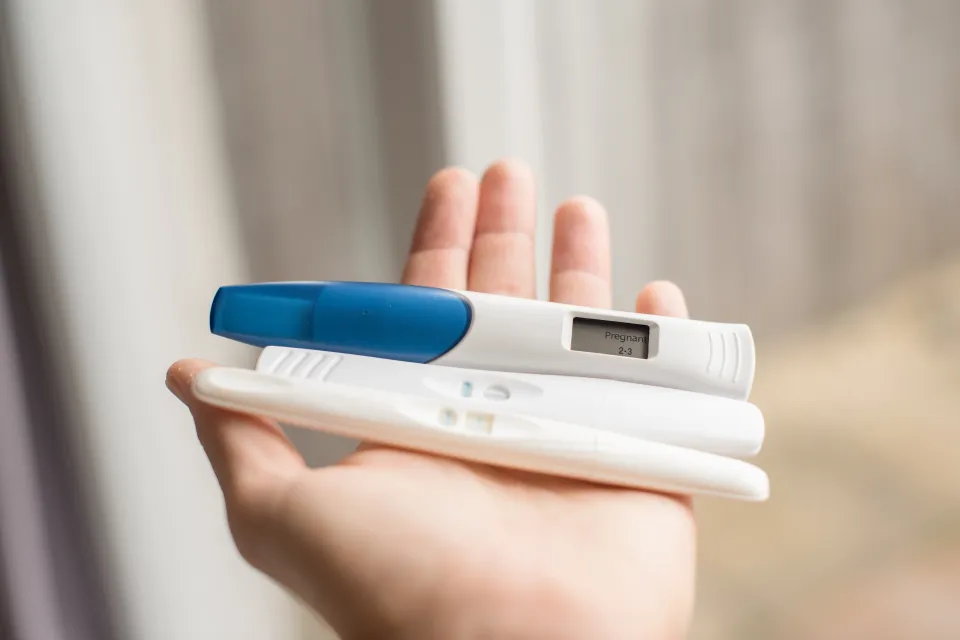
Pregnancy tests look for a hormone called human chorionic gonadotropin (hCG) in urine or blood. This hormone is produced when a fertilized egg implants in the lining of the uterus, typically about 6 to 12 days after ovulation. At the time of implantation, the body begins to produce hCG and levels increase rapidly during early pregnancy.
Recommended: Is Spotting a Sign of Early Pregnancy or Miscarriage?
Home pregnancy tests detect hCG in urine through special antibodies on a test strip that react in the presence of hCG. When you put urine onto the test, it moves up the strip and interacts with these antibodies. If hCG is present above a certain level, a line or symbol will appear to indicate a positive result. If no hCG is present, only the control line will show indicating a negative result.
Pregnancy tests using blood work on much the same principle, but are done in a clinic and can detect even smaller amounts of hCG earlier than urine tests. This makes them more sensitive and sometimes more accurate in very early pregnancy.
The Role of Urine Sample in Pregnancy Testing
The urine sample is very important for the accuracy of a pregnancy test because it is the medium through which the hCG hormone is detected. The level of hCG in urine can fluctuate depending on how early in the pregnancy the test is taken and how diluted the urine is at the time of testing. That is why timing and proper collection of the sample are the key factors in obtaining a reliable result.
- Detection of hCG hormone: The urine carries the hCG hormone, which is what pregnancy tests are designed to detect. Without a sufficient amount of this hormone in the urine, the test may show a negative result even if pregnancy has started.
- Indication of pregnancy stage: The concentration of hCG in urine can help reflect how early or advanced a pregnancy is. Early pregnancy usually has lower levels, while later stages show higher concentrations.
- Determining test accuracy: Proper urine concentration helps ensure that the test works correctly. Highly diluted urine, often caused by excessive fluid intake, can reduce accuracy and lead to false negatives.
- Activation of the test strip: The urine sample triggers the chemical reaction on the test strip that produces visible lines or symbols. Without enough sample or correct application, the test may not activate properly.
- Reducing chances of false results: Using a proper urine sample, especially first morning urine, helps reduce the chances of false negatives by ensuring enough hCG is present for detection.
Recommended: Best Fertility Tracker to Avoid Pregnancy
Can “Too Much Urine” Affect the Result?
Too much urine on a pregnancy test usually does not cause a false negative if you are pregnant. Pregnancy tests work by detecting the hormone hCG in urine . The key factor influencing the result is the amount of hCG present , rather than the precise quantity of urine used .
Too much saturation, however, can sometimes affect how the sample travels through the test strip. If too much urine is used, it may flood the test area and disrupt the normal flow process needed for the chemicals in the strip to react properly. This may sometimes make the result ambiguous or unreliable.
In most cases, too much urine is more likely to produce a false negative result or an unreadable result than a true negative. If you see smudged lines, faint results or no obvious control line, the test cannot be interpreted correctly and should be repeated with a new test.
Most false negatives are due to other factors, such as testing too early, using diluted urine, or failing to follow the instructions correctly. This is why it is always important to use the right amount of urine as stated on the test kit and to follow the timing carefully for the most accurate result.
Common User Errors That Lead to False Negatives
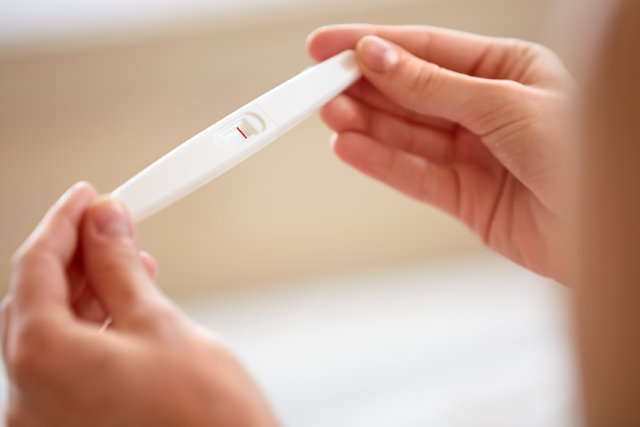
False negative results on a pregnancy test often happen because of simple user mistakes rather than a problem with the test itself. These errors can affect how hCG is detected in urine and lead to incorrect results.
Recommended: How to Plan Pregnancy With Irregular Cycles
1. Testing Too Early
A common mistake is to take the test too early when levels of hCG are not yet high enough to be detected. In early pregnancy the hormone may still be too low, especially before or just after a missed period, to get a negative result despite the start of pregnancy.
2. Using Diluted Urine
Drinking large amounts of water before taking the test dilutes your urine. This means there’s less hCG in the sample, so the test has a harder time detecting the hormone. First morning urine is preferred because it is more concentrated.
3. Incorrect Timing of Reading the Result
Pregnancy tests have a window of time for reading. Read it too early and you may not have a clear line yet. Read it too late and you may have evaporation lines that can be misleading. They can both lead to confusion or misinterpretation.
4. Not Following Test Instructions Properly
Each pregnancy test has specific instructions on how to use it, including how long to dip the strip or how many drops of urine to apply. Ignoring these steps or guessing the timing can affect how the chemical reaction works and lead to inaccurate results.
How to Properly Use a Pregnancy Test for Accurate Results
Using a pregnancy test correctly is very important if you want to get a reliable result. Even small mistakes can affect how the test reads hCG levels in your urine, so following the instructions carefully helps reduce confusion and false results.
1. Read The Instructions First
Before anything else, carefully read the instructions on the test kit. Different brands may have slightly different steps, timing, and methods of use, so understanding the specific guide for your test is essential.
Recommended: What Does an Invalid Pregnancy Test Mean?
2. Use The Right Urine Sample
For best results, use first morning urine because it is more concentrated and contains higher levels of hCG if pregnancy is present. Avoid drinking too much water before testing, as this can dilute the hormone in your urine.
3. Apply The Correct Amount of Urine
Follow the exact method shown in the instructions, whether it is dipping the test strip or using a dropper. Using too little or too much urine can affect how the test strip processes the sample and may lead to unclear results.
4. Wait The Correct Amount of Time
After taking the test, wait for the exact time stated in the instructions before reading the result. Checking too early or too late can lead to misinterpretation, such as faint lines or evaporation lines.
5. Read The Result in Good Lighting
Make sure you read the result within the recommended time frame and under proper lighting. This helps you clearly see the control and test lines and avoid confusion caused by faint or developing marks.
What to Do If You Suspect a Wrong Result

If you think your pregnancy test result may be wrong, the first step is not to panic. Home pregnancy tests are generally accurate when used correctly, but factors like timing, urine concentration, or test errors can sometimes affect the outcome. It is important to confirm the result properly before drawing conclusions.
Recommended: Does Family Planning Affect Future Pregnancy?
- Retake the test after a few days: If your first result is negative but you still suspect pregnancy, wait about 2 to 3 days and take another test. hCG levels double every few days in early pregnancy, so retesting can give a clearer and more accurate result.
- Use first morning urine: When retesting, use your first morning urine because it is more concentrated. This increases the chances of detecting hCG if it is present, especially in early pregnancy when hormone levels are still low.
- Check the test expiration and instructions:Make sure the pregnancy test is not expired and that it was used exactly as instructed. An expired or improperly used test can give unreliable results, including false negatives or unclear readings.
- Consider a blood test for confirmation: If your results are still confusing or you want a more accurate answer, visit a healthcare provider for a blood test. Blood tests can detect lower levels of hCG earlier than urine tests and give a more definitive result.
Conclusion
Pregnancy tests are an easy and effective way to determine pregnancy . When used properly , there is little chance for error , but small mistakes can cause confusion or incorrect results . It is unlikely that too much urine will directly cause a false negative in a pregnancy test. However, improper usage, timing issues or diluted urine may affect the accuracy of the result. Reliability can be greatly improved by knowing how the test is done and following the instructions closely.
In the end, if in doubt, the best thing to do is to retest in a couple of days or talk to a health care professional to be sure you get a clear, accurate answer.